- Get link
- X
- Other Apps
This is Buying Boat guide for beginners you will find many tips to make the whole process easy, simple and fast.
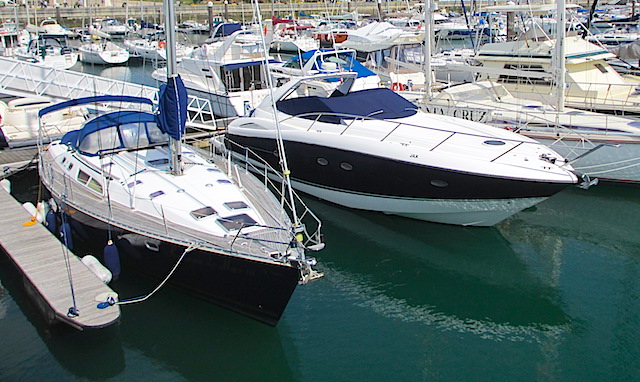
Buying a boat can be one of the most enjoyable experiences of our lives as it has the potential to change the way we enjoy our free time with friends and family, and why not, also alone. However, such as buying a house or a car, it can also be stressful, so we have prepared this guide to guide buyers who have finally decided to buy their first boat or who need to remember the steps to be taken in the purchase process .
If we buy a new boat the agent will take care of almost all the procedures, but it is still important to know the process of buying a second-hand boat since some tips are valid for both cases.
The first thing is to decide which boat is best suited to our plans and budget: perhaps this guide How to choose the right boat is a good first step. It is important to remember that we must compare the price of the boat that interests us with others of the same type since the second-hand boat market groups similar boats with very different prices, even in the case of boats that came out of the same mold in the same year, and neither the most expensive nor the cheapest option tend to be the best: more expensive does not mean more quality or better maintenance and often the bargains hide problems. It is very easy to search and filter searches on boats.com and we will quickly get an idea of what is in the market.
Although the cost of the chosen boat is the most important item, our budget must also take into account the costs of maintenance, mooring, insurance, certification, wintering and other costs that may depend on the type, length and age of the boat. Having this in mind will help us a lot in the whole process.
Another important thing is to have the nautical certification that allows us to steer the boat we want to buy, and if we do not have it yet, take it out as quickly as possible.
The next step is to talk to the seller, who can be an individual or a broker or agent. Being a second-hand boat, we can obtain some prior information to make sure that the seller is indeed the owner of the boat in question and that there are no pending charges or encumbrances such as unpaid mortgages, debts in a shipyard or mooring fees. In any case, in the purchase-sale agreement we will include a clause that protects us from this type of risk. We will also make sure that the ship's documentation is in order so that there are no surprises or delays.
More information on: How to choose a used boat
On our first visit to the ship, if we do not have the help of a broker, we can have a friend or someone of confidence who knows well the type of boat we have chosen and who can advise us. We will start by checking the condition of the interior of the boat: we will look at the carpentry, the engine, the electrical installation, tanks, bilge, kitchen, bathrooms and other compartments. If we are satisfied with the general condition we can then take the boat out of the water and inspect the hull and its components. This cost is usually borne by the buyer, but you can try to negotiate a discount on the purchase price, if it were to occur.

If we detect problems that are not too serious, we can write down everything to budget the necessary arrangements and negotiate a discount. We should not criticize the boat excessively, mainly if we are interested, since we should try to establish a good relationship with the owner and surely he sees the boat in a different way from ours.
We can talk to the employees of the marina or the dry dock to know if the payments are up to date or if they know of any problem or major repair that the ship has had.
This is a good opportunity to check that the boat has the Builder's Plate and the Hull Identification Number.
More information on: Inspect the boat before trying it
It's time to try the boat. Also here a broker or agent can be of great help because if we do not have much experience it will be difficult to detect some less common problems. Depending on the boat, we can hire a skipper or invite an experienced friend who will surely be in a better position to assess the behavior of the boat and its equipment. The test must be done with time and in different sea conditions.
More information on: Buy a boat: The navigation test

It is important to make sure that the boat we have chosen is not more expensive than the market price. Search boats for sale on boats.com can give us an idea of the market value of similar boats, although the prices of second-hand boats can vary greatly depending on the equipment, its state of conservation among other factors such as location and time of year when we are going to make the purchase.
To obtain the best evaluation we must look for several sources of information such as YachtWorld , CosasDeBarcosand some forums dedicated to nautical sports. Brokers usually have access to information about boats sold and their prices in the event that it is not easy for us to find other similar boats for sale at that time. The more data we collect, the easier it will be to have an idea of the value of the boat we want to buy. When we are clear about our reasonable range of prices and using the information we have gathered during the visit and the navigation test, we can start negotiating the purchase price, although for certain cases it is advisable to carry out a professional inspection and use the report of the expert. in our favour.
In many cases, the financing of the purchase is studied right at the beginning of the process, when you think about buying a boat for the first time. It is important to define carefully the necessary budget and the amount to be financed, if this is the case. There are many financial and banks with consumer credit lines and it is worth getting proposals from some, as well as details of their services. The financing usually involves the hiring of an insurance so we must think about how this will affect our budget.
A broker or an agent that assists us in the purchase can recompile all the necessary documentation so that everything is processed without problems. We can also hire an agency with experience in the sector that does not advise. But if we prefer, we can take the whole process ourselves.
At some point, the owner or seller must provide us with as much information and documentation as possible that certifies the ownership of the vessel, its suitability and that of the equipment on board. It is important to check that all the ship's documentation is in order and available. This will make us not waste time and avoid many problems at the time of making the change of ownership.
These are the documents that the seller must provide us: a copy of your ID; Seat sheet; CE Marking and / or Navigation Certificate and Technical Ship Inspection Report (ITB); Certificate of suitability for the installation of radio equipment; Application for Installation Authorization and / or dismantling of radio equipment; Invoices of equipment, engines, auxiliary; owner's manual and other equipment manuals on board; Permit of circulation of the trailer, if it is the case.

An inspection of condition and condition, or a pre-purchase inspection, is another step prior to the decision to move forward with the purchase. Not all boats justify an inspection but if the investment we intend to make is important, this is a good way to know exactly what we are buying. This complete and detailed inspection afloat and dry is a non-intrusive examination of all accessible areas of the ship and its equipment, to obtain a completely independent and disinterested professional opinion on the condition, integrity and durability of the hull, superstructure and the teams. If we need financing for the purchase, we must also include in the inspection a valuation of the boat.
It is advisable to know the costs and conditions of the nautical insurance that we wish to hire before instructing the marine expert, since the requirements of the insurers can vary and if in the end they ask us for additional verifications after the inspection is finished, this can imply more costs.
If all goes well, all these steps will lead us to formalize an offer that once accepted will give rise to the purchase-sale contract.
More information on: Expertise and pre-purchase inspection of ships: Trust an expert
The purchase and sale contracts of vessels are mandatory and are governed by the provisions of the Civil Code existing freedom of form, in addition, when the seller is a professional, the buyer is protected by the General Law for the defense of consumers.
To prevent problems, it is best to do all the previous work very well. If an inspection has been made, the report of the expert will be of great help to list and reflect the status of the ship and its equipment in the contract, otherwise, we will do our best to make a detailed inventory of the ship and the equipment object of the sale and attach it to the contract.
The National Association of Nautical Companies (ANEN) and the Association of Recreational Navigators (ANAVRE) have collaborated to provide a model of purchase-sale contractso it can be used as a starting point. According to the cases, the ideal, obviously, is to consult a professional who draws up a contract according to the transaction we intend to make.
It is common to agree on an initial payment, or signal, at the time of signing the contract.
This tax is applied in the case that the purchase-sale is between individuals. The tax rate is 4% of the price in the contract, although it varies according to the Autonomous Community. You can fill in the 620 model online and pay the fee at the bank or go to the tax office of our tax domicile and process it there paying the amount at the window directly. The models to be filled also vary according to the Autonomous Community, so it is best to certify that we are filling in the correct model.
After payment, we will request the original stamping of the purchase-sale contract and a copy that we will have to present later in Captaincy.
If we buy the boat from an agent or broker, the invoice of the transaction includes VAT and the seller will make the corresponding settlement.
We have signed the contract, made the payments, settled the taxes, we have photocopies of everything and we are the new owners of the ship but we still have to comply with some formalities to formalize the change of ownership.
This procedure is done in the Captaincies. The transfer of ownership of the vessel must be requested by filling in this form in duplicate and presenting it in the Captaincy accompanied by the documentation listed on the form itself.
We fill the 790 model of payment of the registration fee of ships and shipping companies and pay in the bank or do the processing and payment of the online registration fee .
If we are going to change the name of the ship we will pay another rate, which is also processed in Captaincy.
The Captaincies usually take a few weeks to process the registration but they will give us a flyer of the application so we can navigate with our boat.
The Ministry of Development devotes a page to the formalities to be fulfilled in the purchase-sale of second-hand boats so we can consult it for more details and updates.
We must also define what kind of insurance we need. In Spain, liability insurance for ships is mandatory and covers the risks of death or bodily injury to third parties, material damage to third parties, economic losses that may be caused to third parties and damage to ships by collision or without contact.
These coverages can be expanded with voluntary insurance. There are policies with a wide variety of coverage and an insurer with experience in nautical can advise us on the most suitable coverages for our boat and for the type of use that we are going to give but usually a voluntary nautical insurance must include the following risks : own damages, occupants, assistance in navigation, assistance in travel, claim of damages to third parties and legal defense.
More information: Hire the boat insurance

We already know that we are in South America and everything is a bit more complicated and cumbersome than in the countries around us - the nautical does not escape the rule - but none of the steps we have described above will prevent us from successfully carrying our buy and join the thousands of people who enjoy the privilege of looking at our shores from the sea. Welcome aboard!
If we buy a new boat the agent will take care of almost all the procedures, but it is still important to know the process of buying a second-hand boat since some tips are valid for both cases.
Boat
The first thing is to decide which boat is best suited to our plans and budget: perhaps this guide How to choose the right boat is a good first step. It is important to remember that we must compare the price of the boat that interests us with others of the same type since the second-hand boat market groups similar boats with very different prices, even in the case of boats that came out of the same mold in the same year, and neither the most expensive nor the cheapest option tend to be the best: more expensive does not mean more quality or better maintenance and often the bargains hide problems. It is very easy to search and filter searches on boats.com and we will quickly get an idea of what is in the market.
Although the cost of the chosen boat is the most important item, our budget must also take into account the costs of maintenance, mooring, insurance, certification, wintering and other costs that may depend on the type, length and age of the boat. Having this in mind will help us a lot in the whole process.
Another important thing is to have the nautical certification that allows us to steer the boat we want to buy, and if we do not have it yet, take it out as quickly as possible.
The next step is to talk to the seller, who can be an individual or a broker or agent. Being a second-hand boat, we can obtain some prior information to make sure that the seller is indeed the owner of the boat in question and that there are no pending charges or encumbrances such as unpaid mortgages, debts in a shipyard or mooring fees. In any case, in the purchase-sale agreement we will include a clause that protects us from this type of risk. We will also make sure that the ship's documentation is in order so that there are no surprises or delays.
More information on: How to choose a used boat
Arrange a visit
On our first visit to the ship, if we do not have the help of a broker, we can have a friend or someone of confidence who knows well the type of boat we have chosen and who can advise us. We will start by checking the condition of the interior of the boat: we will look at the carpentry, the engine, the electrical installation, tanks, bilge, kitchen, bathrooms and other compartments. If we are satisfied with the general condition we can then take the boat out of the water and inspect the hull and its components. This cost is usually borne by the buyer, but you can try to negotiate a discount on the purchase price, if it were to occur.
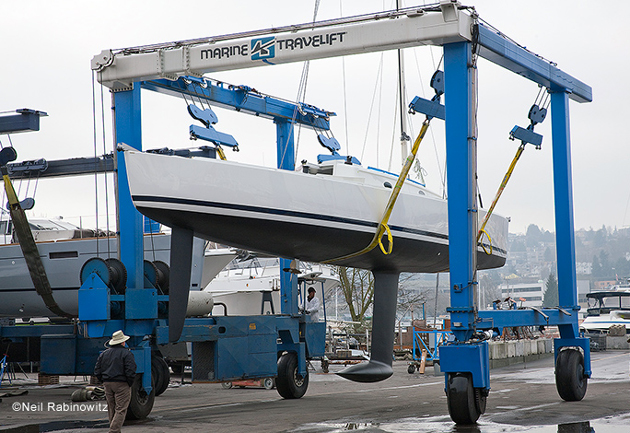
There are many problems that are only identified by removing the boat from the water. Photo: Neil Rabinowitz.
If we detect problems that are not too serious, we can write down everything to budget the necessary arrangements and negotiate a discount. We should not criticize the boat excessively, mainly if we are interested, since we should try to establish a good relationship with the owner and surely he sees the boat in a different way from ours.
We can talk to the employees of the marina or the dry dock to know if the payments are up to date or if they know of any problem or major repair that the ship has had.
This is a good opportunity to check that the boat has the Builder's Plate and the Hull Identification Number.
More information on: Inspect the boat before trying it
Navigation test
It's time to try the boat. Also here a broker or agent can be of great help because if we do not have much experience it will be difficult to detect some less common problems. Depending on the boat, we can hire a skipper or invite an experienced friend who will surely be in a better position to assess the behavior of the boat and its equipment. The test must be done with time and in different sea conditions.
More information on: Buy a boat: The navigation test
Negotiate the best price

Consult the sale price and characteristics of boats similar to the one that interests us on boats.com gives us a good idea of the market and will help us to negotiate better the purchase price.
It is important to make sure that the boat we have chosen is not more expensive than the market price. Search boats for sale on boats.com can give us an idea of the market value of similar boats, although the prices of second-hand boats can vary greatly depending on the equipment, its state of conservation among other factors such as location and time of year when we are going to make the purchase.
To obtain the best evaluation we must look for several sources of information such as YachtWorld , CosasDeBarcosand some forums dedicated to nautical sports. Brokers usually have access to information about boats sold and their prices in the event that it is not easy for us to find other similar boats for sale at that time. The more data we collect, the easier it will be to have an idea of the value of the boat we want to buy. When we are clear about our reasonable range of prices and using the information we have gathered during the visit and the navigation test, we can start negotiating the purchase price, although for certain cases it is advisable to carry out a professional inspection and use the report of the expert. in our favour.
Financing
In many cases, the financing of the purchase is studied right at the beginning of the process, when you think about buying a boat for the first time. It is important to define carefully the necessary budget and the amount to be financed, if this is the case. There are many financial and banks with consumer credit lines and it is worth getting proposals from some, as well as details of their services. The financing usually involves the hiring of an insurance so we must think about how this will affect our budget.
Documentation
A broker or an agent that assists us in the purchase can recompile all the necessary documentation so that everything is processed without problems. We can also hire an agency with experience in the sector that does not advise. But if we prefer, we can take the whole process ourselves.
At some point, the owner or seller must provide us with as much information and documentation as possible that certifies the ownership of the vessel, its suitability and that of the equipment on board. It is important to check that all the ship's documentation is in order and available. This will make us not waste time and avoid many problems at the time of making the change of ownership.
These are the documents that the seller must provide us: a copy of your ID; Seat sheet; CE Marking and / or Navigation Certificate and Technical Ship Inspection Report (ITB); Certificate of suitability for the installation of radio equipment; Application for Installation Authorization and / or dismantling of radio equipment; Invoices of equipment, engines, auxiliary; owner's manual and other equipment manuals on board; Permit of circulation of the trailer, if it is the case.
Pre-purchase inspection or expertise
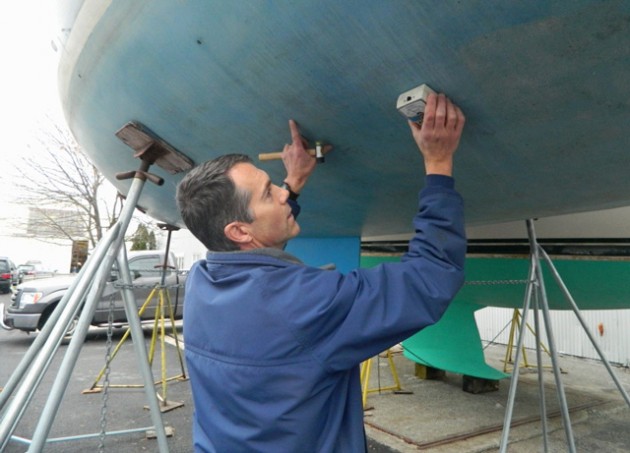
The expert in action: In some cases, hiring a pre-purchase inspection is the safest thing to do.
An inspection of condition and condition, or a pre-purchase inspection, is another step prior to the decision to move forward with the purchase. Not all boats justify an inspection but if the investment we intend to make is important, this is a good way to know exactly what we are buying. This complete and detailed inspection afloat and dry is a non-intrusive examination of all accessible areas of the ship and its equipment, to obtain a completely independent and disinterested professional opinion on the condition, integrity and durability of the hull, superstructure and the teams. If we need financing for the purchase, we must also include in the inspection a valuation of the boat.
It is advisable to know the costs and conditions of the nautical insurance that we wish to hire before instructing the marine expert, since the requirements of the insurers can vary and if in the end they ask us for additional verifications after the inspection is finished, this can imply more costs.
If all goes well, all these steps will lead us to formalize an offer that once accepted will give rise to the purchase-sale contract.
More information on: Expertise and pre-purchase inspection of ships: Trust an expert
Contract
The purchase and sale contracts of vessels are mandatory and are governed by the provisions of the Civil Code existing freedom of form, in addition, when the seller is a professional, the buyer is protected by the General Law for the defense of consumers.
To prevent problems, it is best to do all the previous work very well. If an inspection has been made, the report of the expert will be of great help to list and reflect the status of the ship and its equipment in the contract, otherwise, we will do our best to make a detailed inventory of the ship and the equipment object of the sale and attach it to the contract.
The National Association of Nautical Companies (ANEN) and the Association of Recreational Navigators (ANAVRE) have collaborated to provide a model of purchase-sale contractso it can be used as a starting point. According to the cases, the ideal, obviously, is to consult a professional who draws up a contract according to the transaction we intend to make.
It is common to agree on an initial payment, or signal, at the time of signing the contract.
ITP - Tax on Property Transfers
This tax is applied in the case that the purchase-sale is between individuals. The tax rate is 4% of the price in the contract, although it varies according to the Autonomous Community. You can fill in the 620 model online and pay the fee at the bank or go to the tax office of our tax domicile and process it there paying the amount at the window directly. The models to be filled also vary according to the Autonomous Community, so it is best to certify that we are filling in the correct model.
After payment, we will request the original stamping of the purchase-sale contract and a copy that we will have to present later in Captaincy.
VAT - Value Added Tax
If we buy the boat from an agent or broker, the invoice of the transaction includes VAT and the seller will make the corresponding settlement.
Procedures with the Administration
We have signed the contract, made the payments, settled the taxes, we have photocopies of everything and we are the new owners of the ship but we still have to comply with some formalities to formalize the change of ownership.
This procedure is done in the Captaincies. The transfer of ownership of the vessel must be requested by filling in this form in duplicate and presenting it in the Captaincy accompanied by the documentation listed on the form itself.
We fill the 790 model of payment of the registration fee of ships and shipping companies and pay in the bank or do the processing and payment of the online registration fee .
If we are going to change the name of the ship we will pay another rate, which is also processed in Captaincy.
The Captaincies usually take a few weeks to process the registration but they will give us a flyer of the application so we can navigate with our boat.
The Ministry of Development devotes a page to the formalities to be fulfilled in the purchase-sale of second-hand boats so we can consult it for more details and updates.
insurance
We must also define what kind of insurance we need. In Spain, liability insurance for ships is mandatory and covers the risks of death or bodily injury to third parties, material damage to third parties, economic losses that may be caused to third parties and damage to ships by collision or without contact.
These coverages can be expanded with voluntary insurance. There are policies with a wide variety of coverage and an insurer with experience in nautical can advise us on the most suitable coverages for our boat and for the type of use that we are going to give but usually a voluntary nautical insurance must include the following risks : own damages, occupants, assistance in navigation, assistance in travel, claim of damages to third parties and legal defense.
More information: Hire the boat insurance
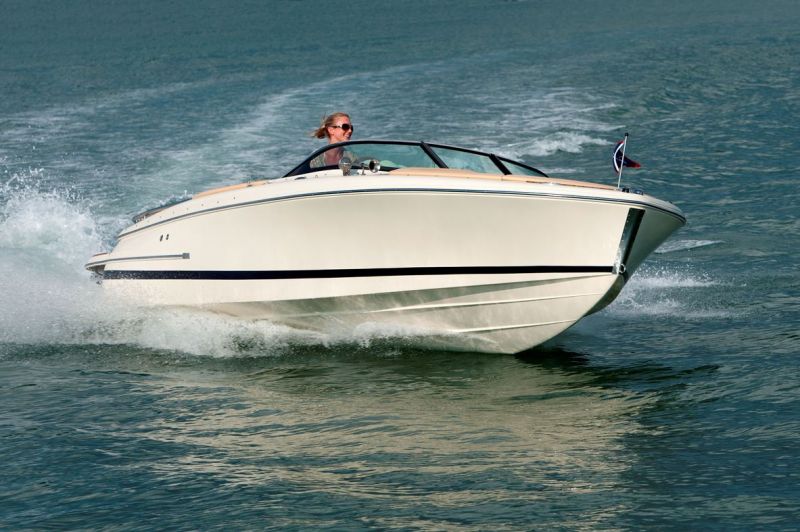
The tranquility of a good purchase. And ready to enjoy! Photo: Chris Craft
We already know that we are in South America and everything is a bit more complicated and cumbersome than in the countries around us - the nautical does not escape the rule - but none of the steps we have described above will prevent us from successfully carrying our buy and join the thousands of people who enjoy the privilege of looking at our shores from the sea. Welcome aboard!
Comments
Post a Comment